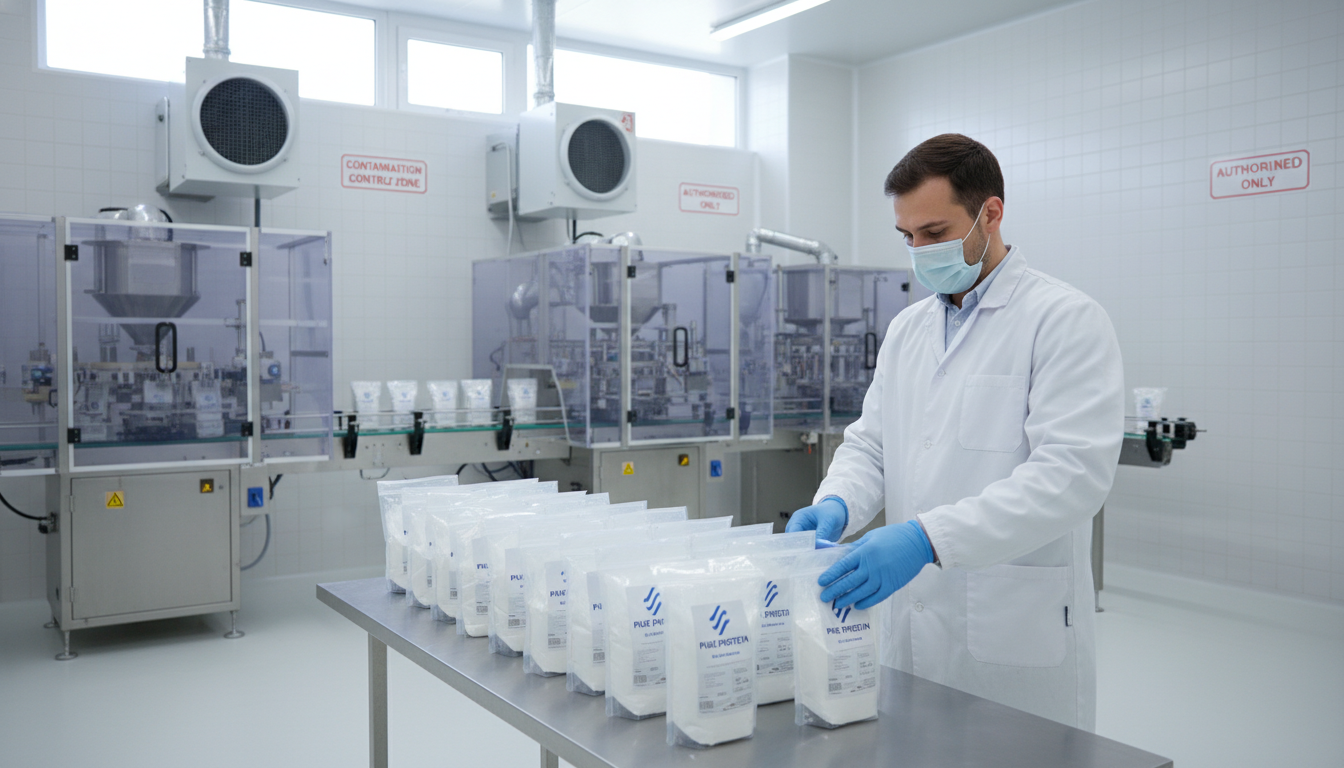
Have you ever wondered what invisible threats could be lurking in your protein powder before it reaches your shaker bottle? The Wintech Package protein powder packing stage represents the most critical moment in ensuring product safety and quality for consumers.
Protein powder manufacturing demands absolute precision during the packing process. When you choose a protein powder packing partner, you’re not just selecting a packaging service – you’re protecting your brand’s reputation and your customers’ health. Contamination prevention isn’t an option; it’s a necessity in the competitive sports nutrition market.
Wintech Package understands the intricate challenges of protein powder packing. From biological risks to potential chemical contaminants, every step of the protein powder packing process requires meticulous attention to detail. Your product’s integrity depends on rigorous quality control and advanced contamination prevention strategies.
Key Takeaways
- Contamination prevention is crucial in protein powder packing
- Multiple sources of contamination exist during manufacturing
- Proper equipment and protocols minimize product risk
- Quality control is essential for consumer safety
- Professional packaging partners ensure higher standards
Understanding the Importance of Protein Powder Packing
Protein powder packing is a critical process that directly impacts the safety, quality, and consumer trust in sports nutrition packaging. Your approach to protein supplement packaging solutions can make or break the entire product experience. The intricate world of protein powder packing requires meticulous attention to detail and comprehensive understanding of potential contamination sources.
The Role of Hygiene in Protein Powder Packing
Maintaining rigorous hygiene protocols during protein powder packing is paramount. Your production environment must be a controlled space that minimizes potential contamination risks. Protein-rich products create an ideal breeding ground for microbial growth, making sanitation absolutely crucial.
- Implement documented sanitation schedules
- Establish strict personnel hygiene standards
- Conduct regular environmental monitoring
- Design equipment with hygienic principles
Common Contaminants in Protein Powder Packing
Understanding potential contamination sources is key to protecting your sports nutrition products. Protein supplement packaging solutions must address multiple risk areas during the packing process.
- Ingredient dust escape during filling
- Residue from incomplete mixer discharge
- Pipeline blockages
- Heavy metal intrusion from raw materials
Best Practices for Protein Powder Packing
Your protein powder packing strategy should incorporate comprehensive quality control measures. Implementing cGMP certification guidelines ensures thorough personnel training, facility cleanliness, and precise material handling. Third-party testing becomes an essential step in confirming product potency and purity.
Precision in protein powder packing is not just a process—it’s a commitment to consumer health and product excellence.
Equipment Considerations in Protein Powder Packing
Selecting the right equipment is crucial for maintaining product quality and safety in protein powder packing. Your choice of machinery directly impacts contamination prevention, product integrity, and overall production efficiency.
When approaching protein powder packing, you need to carefully evaluate several key equipment factors that ensure optimal performance and product protection.
Selecting the Right Protein Powder Filling Machines
Your protein powder filling machines should meet specific criteria to guarantee exceptional packaging results. Consider these critical selection factors:
- Sanitary design with smooth surfaces
- Easy-to-clean components
- Corrosion-resistant materials
- Dust-minimization capabilities
Key Equipment Characteristics for Protein Powder Packaging
Different powder characteristics demand specialized protein powder filling machines. Free-flowing and cohesive powders require unique handling approaches to prevent contamination and ensure accurate filling.
| Equipment Feature | Contamination Prevention |
|---|---|
| Automated Systems | Reduces human contact |
| Sealed Filling Zones | Minimizes external particle introduction |
| Precision Dosing | Ensures consistent product quality |
Maintenance for Safe Protein Powder Packing
Regular maintenance of your protein powder packing equipment is essential. Implement rigorous cleaning protocols for food-grade protein containers and whey protein containers to prevent potential contamination risks.
By prioritizing equipment selection and maintenance, you’ll create a robust protein powder packing process that protects product quality and meets the highest industry standards.
Quality Control Measures in Protein Powder Packing
Ensuring the highest standards of safety and quality is critical in protein powder packing. Your protein supplement’s integrity depends on rigorous quality control processes that protect consumer health and maintain product excellence.
Effective quality control testing in protein powder packing involves multiple comprehensive steps to guarantee product safety and consistency. Your approach must be methodical and detailed.
Implementing Quality Control Checks
Your protein powder packing operation requires strategic quality control protocols:
- Incoming raw material verification
- Environmental sampling for contaminants
- Surface swab testing of packing equipment
- Fill weight and seal integrity checks
Traceability Systems in Protein Powder Packing
Implementing robust traceability systems ensures complete accountability in bulk protein supplements packaging. Your documentation must track every stage of production.
| Quality Control Parameter | Verification Method | Frequency |
|---|---|---|
| Heavy Metal Testing | Spectroscopic Analysis | Every Batch |
| Microbiological Screening | Culture & Microscopic Examination | Per Production Cycle |
| Protein Content Verification | Kjeldahl Method | Quarterly |
cGMP compliance demands meticulous batch documentation and comprehensive testing protocols. Your traceability system protects consumer safety and builds brand reputation in the competitive protein supplement market.
Partnering with Wintech Package for Efficient Protein Powder Packing
When selecting a partner for protein powder packing, Wintech Package emerges as a leading solution in the industry. Your protein powder production requires precision, cleanliness, and advanced technological expertise. Wintech Package delivers custom protein powder bags with unparalleled contamination prevention strategies that protect your product’s integrity from initial packaging to final distribution.
Our packaging solutions are designed to meet the rigorous demands of the protein powder market. We understand that your manufacturing partnership must prioritize quality and safety. With state-of-the-art filling machines specifically engineered for protein powder packing, Wintech Package ensures minimal contamination risk while maintaining FDA compliance and cGMP standards.
Benefits of Choosing Wintech Package
By choosing Wintech Package, you gain access to innovative contamination prevention technologies. Our patented Cone Valve technology guarantees dust-free and residue-free product discharge. We provide dedicated International Bulk Containers (IBCs) for specific recipes, preventing cross-contamination between different product lines and preserving the unique characteristics of each protein powder formulation.
Customer Support and Resources
Your success is our priority. Wintech Package offers comprehensive support throughout your protein powder packing journey. We provide technical expertise, ongoing consultation, and advanced resources to help you navigate the complex landscape of protein powder manufacturing. Our team is committed to helping you achieve superior product quality that drives customer loyalty and market growth.